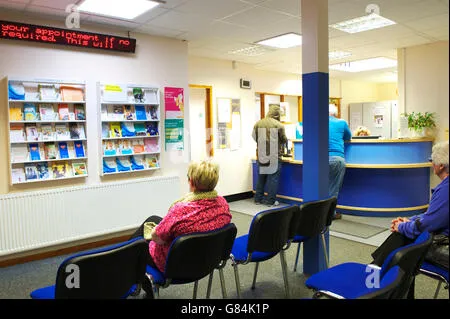
The Quiet Consultation: Breaking the British Habit of Leaving the GP's Office With Unanswered Questions
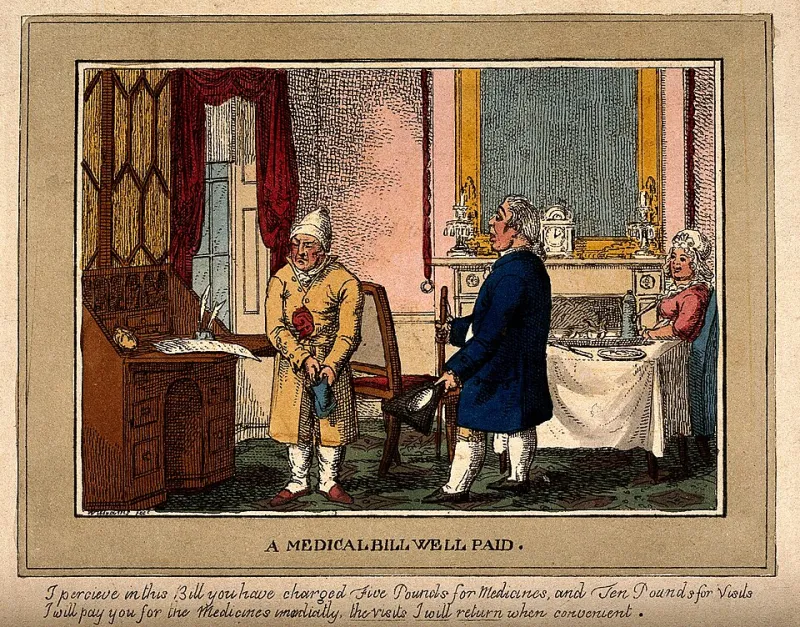
Photo: Unknown, CC BY 4.0, via Wikimedia Commons
A Nation of Polite Sufferers
Picture the scene. You have spent a fortnight worrying about a symptom. You have rehearsed what you want to say on the walk to the surgery. You sit down opposite your GP, and within moments — somehow — you find yourself agreeing that you are "fine, really," accepting a prescription for something adjacent to your actual concern, and thanking the doctor profusely as you leave.
If this sounds familiar, you are in considerable company. Research consistently shows that British patients are among the most reticent in Europe when it comes to voicing concerns, challenging diagnoses, or simply asking for clarification during medical appointments. This is not a character flaw. It is the product of deeply ingrained cultural conditioning, structural pressures within the NHS, and a power dynamic that many patients find genuinely difficult to navigate — even when they are perfectly confident individuals in every other area of their lives.
Understanding why this happens is the first step towards changing it. And changing it, even modestly, can have a profound effect on health outcomes.
The Cultural Architecture of Silence
British social norms place enormous value on not being a burden, not "making a fuss," and deferring to perceived authority. These instincts, which serve perfectly well in many social contexts, become quietly counterproductive in a clinical setting.
The GP surgery amplifies these tendencies in specific ways. The ten-minute appointment — still the standard in most practices across England — creates an atmosphere of implicit urgency. Patients sense that time is scarce, and many internalise this as a reason to compress or self-edit their concerns. There is a not-uncommon fear of being perceived as a hypochondriac, of wasting NHS resources, or — more subtly — of receiving news one is not emotionally prepared for.
Dr Sarah Henley, a GP based in the East Midlands who has spoken with our editorial team, puts it plainly: "I regularly see patients who have clearly been sitting on something significant for months. When I ask why they didn't mention it sooner, the answer is almost always some version of 'I didn't want to waste your time.' That breaks my heart a little, every time. My time exists to be used for exactly that."
This sentiment is echoed widely among GPs. The communication gap is not, in most cases, created by doctors who are indifferent or dismissive. It is a gap that forms in the space between what patients feel and what they feel permitted to say.
What Doctors Wish Patients Knew
We asked several UK-based clinicians — GPs, hospital consultants, and practice nurses — what they genuinely wish their patients understood about consultations. Several themes emerged with striking consistency.
"There are no stupid questions." This phrase risks sounding trite, but its clinical relevance is real. Doctors are trained to triage information and identify what matters. A question that feels embarrassing or trivial to a patient may contain a detail that redirects the entire consultation productively. Clinicians would far rather hear everything and filter, than receive a curated account that omits the crucial part.
"Tell us what you think is wrong." Many patients assume that offering their own hypothesis will irritate the doctor or seem presumptuous. The opposite is frequently true. A patient who says "I've been wondering if this might be related to my thyroid" gives the clinician useful information — both about the symptom and about the patient's health literacy and concerns. It opens a conversation rather than closing one down.
"Bring a list." Dr Marcus Webb, a hospital consultant in cardiology, is emphatic on this point: "A written list of questions is not an imposition. It is one of the most efficient things a patient can bring into a consultation. It means we cover everything you came for, rather than having you remember the most important question on the bus home."
"It is acceptable to ask us to slow down." Medical language can be opaque, and even experienced patients sometimes find themselves nodding along to an explanation they have not fully understood. Doctors — good ones, at least — would rather pause and rephrase than have a patient leave with a misunderstanding that affects how they manage their condition.
Structural Barriers Worth Acknowledging
Fairness demands that we acknowledge the system's role in this dynamic. The ten-minute appointment is genuinely constraining, and patients are not imagining the time pressure — it is real. NHS GP practices are operating under considerable strain, with many surgeries managing patient lists far larger than recommended guidelines suggest. When a patient senses urgency, they are often reading the room accurately.
This does not, however, mean that the only solution lies in systemic reform. Individual patients can take meaningful steps within the current constraints to make their consultations more effective — without requiring a restructured NHS to do so.
Practical Techniques for a More Effective Consultation
The following approaches are grounded in evidence from patient communication research and reflect the advice of clinicians who speak with us regularly.
Prepare before you arrive. Write down your three most important concerns before the appointment. Rank them. If time runs short, you will have addressed the most pressing issues first. Bring the list with you and place it on the desk at the start of the consultation.
Open with your primary concern clearly. Rather than building towards your main worry, state it early: "The main thing I've come about today is..." This allows the GP to allocate time appropriately rather than discovering the central issue in the final two minutes.
Use the phrase "I'd like to understand..." This framing is non-confrontational and signals that you want engagement rather than just a prescription. For example: "I'd like to understand what might be causing this, and what my options are."
Ask for written information or a summary. You are entitled to request that your GP documents the key points of your consultation — particularly diagnoses, treatment plans, or referral decisions. Many practices now offer this via online patient portals.
Bring someone with you if possible. A trusted companion can help recall information, notice things you might miss under stress, and gently prompt you if you forget to raise something important. Most GPs welcome this.
Request a follow-up if you need one. If a consultation raises more questions than it answers, it is entirely reasonable to book a further appointment to discuss the matter once you have had time to process the information.
Reframing the Relationship
Perhaps the most significant shift available to British patients is a conceptual one: understanding that the GP consultation is a collaboration, not an audience. You are not petitioning an authority figure for assistance — you are engaging a trained professional in a shared endeavour to understand and improve your health.
Your GP needs your information as much as you need their expertise. The history you provide, the symptoms you describe, the concerns you voice — these are clinical data without which even the most skilled doctor is working in partial darkness.
At Doctors for Patients UK, our mission is grounded in exactly this principle: that better health outcomes emerge not from patients deferring silently to the system, but from patients and doctors working together with honesty, mutual respect, and shared purpose. The consultation room is where that partnership either flourishes or falters — and with a little preparation and a shift in perspective, it can flourish far more often than it currently does.
You came to the appointment because something matters to your health. That matters. Say so.