Know Your NHS Rights: How to Navigate Waiting Lists and Access Care Faster
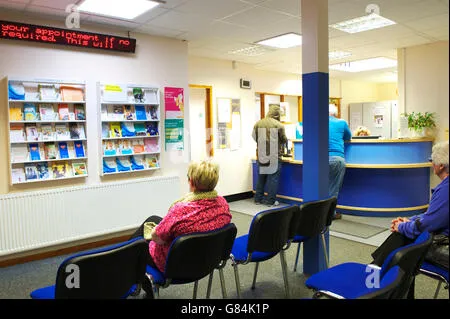
Photo: NHS patient waiting room UK hospital reception desk, via l450v.alamy.com
The Scale of the Problem — and Why Your Rights Matter
As of 2024, the NHS waiting list in England has hovered around seven million people. For many patients, this figure is more than a statistic — it represents months of discomfort, anxiety, and uncertainty. What is frequently overlooked, however, is that waiting is not always your only option. The NHS constitution enshrines a set of patient rights that carry genuine legal weight, and exercising them can, in many cases, significantly shorten the time between referral and treatment.
At Doctors for Patients UK, we believe that an informed patient is a safer patient. This guide aims to clarify exactly what you are entitled to, how those entitlements work in practice, and what steps you can take if the system fails to meet its obligations.
What the NHS Constitution Actually Guarantees
The NHS Constitution for England sets out rights that apply to all patients receiving NHS-funded care. These are not aspirational targets or goodwill gestures — they are legal commitments backed by statute.
Among the most significant for those on waiting lists are the following:
- The 18-week referral-to-treatment standard: Once a GP refers you for specialist treatment, the NHS is committed to beginning that treatment within 18 weeks. This applies to elective (non-emergency) procedures.
- The two-week wait for suspected cancer: If your GP suspects cancer, you should be seen by a specialist within two weeks of referral.
- The right to be treated at a time that suits you: Within reason, the NHS should offer appointment times that accommodate your circumstances.
- The right to choose your provider: Patients in England have a legal right to choose where they receive outpatient care from a list of clinically appropriate providers — including some private hospitals offering NHS-funded treatment.
It is worth noting that devolved NHS systems in Scotland, Wales, and Northern Ireland operate under different frameworks, with their own waiting time standards and patient rights documentation. If you reside outside England, we recommend consulting NHS Scotland, NHS Wales, or the Health and Social Care Board in Northern Ireland for territory-specific guidance.
The Right to Choose: An Underused Tool
Perhaps the most powerful — and least utilised — entitlement available to NHS patients in England is the right to choose. Under the NHS Choice Framework, when your GP refers you for a first outpatient appointment, you are legally entitled to choose from any clinically appropriate provider registered with NHS England. This can include:
- Other NHS trusts, potentially with shorter waiting times
- Independent sector providers contracted by the NHS (effectively private hospitals treating NHS patients at no cost to you)
- NHS foundation trusts outside your immediate geographical area
To exercise this right, you should ask your GP or referral coordinator to check the NHS e-Referral Service (formerly Choose and Book) for available providers. Waiting times vary considerably between trusts, and switching to an alternative provider even 30 or 40 miles away could reduce your wait by several months.
If your GP does not raise the option of provider choice at the point of referral, you are entirely within your rights to ask — and to expect a meaningful response.
When the 18-Week Standard Is Breached
If you have been waiting more than 18 weeks from referral without a confirmed treatment date, your rights have likely been breached. This does not happen automatically without consequence. There are clear steps you can take:
Step 1 — Contact your provider's Patient Advice and Liaison Service (PALS) Every NHS trust has a PALS team whose role is to help patients resolve concerns informally and swiftly. They can investigate your waiting time, liaise with the relevant clinical team, and help facilitate a faster appointment. This should almost always be your first point of contact.
Step 2 — Request an alternative provider If your current trust cannot offer treatment within a reasonable timeframe, you may formally request transfer to a provider that can. Your NHS commissioner — typically your Integrated Care Board (ICB) — has a responsibility to facilitate this.
Step 3 — Lodge a formal complaint If informal resolution fails, you have the right to raise a formal complaint with the trust under the NHS complaints procedure. Trusts are required to acknowledge complaints within three working days and provide a full response within 40 working days.
Step 4 — Escalate to the Parliamentary and Health Service Ombudsman (PHSO) Should you remain dissatisfied after the trust's response, the PHSO offers an independent review. This is a free service and represents the final stage of the NHS complaints process in England.
Keeping Records: Your Most Practical Asset
Throughout any dispute or escalation, documentation is invaluable. Keep a written log of every communication — dates of referral letters, telephone calls with PALS, appointment confirmations or cancellations, and the names of any staff members you speak with. Request copies of your referral letters and correspondence in writing wherever possible.
This paper trail not only strengthens any formal complaint but also helps your GP and specialist team understand your situation quickly if you need to seek advice urgently.
The Role of Your GP in Advocating for You
Your GP is not simply a gateway to the wider NHS — they are a clinical advocate who can, and often should, intervene on your behalf if your condition deteriorates while you wait. If your symptoms worsen significantly, do not wait for your next scheduled contact. Book an urgent appointment with your GP and ask them to:
- Mark your referral as urgent if clinically appropriate
- Contact the receiving specialist directly to expedite review
- Consider whether interim treatment or pain management can improve your quality of life in the meantime
At Doctors for Patients UK, we regularly hear from patients who felt reluctant to "bother" their GP while waiting. We want to be unequivocal: if your condition is changing, your GP needs to know. That is precisely what they are there for.
Looking Ahead: NHS Reform and What It Means for Patients
The NHS Long Term Workforce Plan and ongoing reforms to Integrated Care Systems represent meaningful — if incremental — steps towards reducing waiting times structurally. Patient advocacy organisations, including ourselves, continue to press for greater transparency in waiting list data, clearer communication from trusts when targets are missed, and stronger enforcement of the rights already enshrined in the NHS Constitution.
Change at a systemic level takes time. In the interim, the most effective thing any individual patient can do is understand their entitlements and feel confident enough to use them. You are not a passive recipient of care — you are a rights-holding participant in a system built to serve you.
If you are uncertain about your specific situation, our resources section includes template letters for PALS enquiries and formal complaints, as well as links to NHS e-Referral Service guidance. You do not have to navigate this alone.