No Appointment Needed: Putting Your Community Pharmacist to Work for Your Health
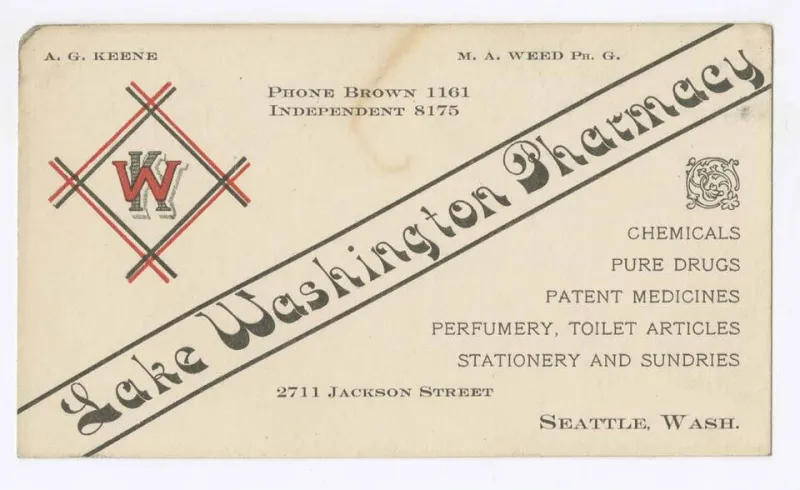
Photo: Lake Washington Pharmacy, Public domain, via Wikimedia Commons
There is a particular kind of frustration familiar to anyone who has spent a morning trying to reach a GP reception desk: the sense that the only door into NHS care is the one everybody is already pushing against. In most high streets, a second door stands open a few hundred yards away, staffed by registered clinicians, open at weekends, and requiring no appointment at all. It is, for many patients, the most underused resource in the health service.
Community pharmacies in the United Kingdom dispense well over a billion prescriptions a year, but dispensing is now the least interesting thing they do. Over the past decade, and particularly since 2024, community pharmacy has been commissioned to take on a defined share of frontline clinical work. The difficulty is not availability. It is awareness.
What Pharmacy First covers in England
Launched at the end of January 2024, the Pharmacy First service allows community pharmacists to assess and, where appropriate, treat seven common conditions without a GP appointment. Where a prescription-only medicine is needed, the pharmacist supplies it directly under a patient group direction, at no charge to the patient.
The conditions covered are sinusitis, sore throat, earache in children, infected insect bites, impetigo, shingles and uncomplicated urinary tract infection in women. Each has defined age limits and clinical criteria, and the pharmacist will refer you on if your presentation falls outside them. That referral is not a failure of the service; it is the safety mechanism built into it.
Crucially, the consultation record is sent to your GP practice, so continuity is preserved. A Pharmacy First consultation is not a private transaction off to one side of your medical history.
Far more than minor ailments
Pharmacy First tends to dominate headlines, but the wider community pharmacy offer is broader than most patients realise.
- Blood pressure checks. Adults aged 40 and over in England can ask for a free blood pressure check without an appointment. Raised readings are referred onwards, and the check is designed to catch hypertension in people who feel entirely well.
- Contraception. The NHS Pharmacy Contraception Service allows pharmacists to start and continue oral contraception, which removes an unnecessary trip to general practice for many women.
- Medicine reviews and the New Medicine Service. If you have been started on a new medicine for a long-term condition, you are entitled to follow-up support. Pharmacists can also review how your medicines work together, which matters greatly for anyone taking four or more.
- Vaccinations. Seasonal influenza and COVID-19 vaccination are widely delivered through pharmacies, often with far greater flexibility around working hours than general practice can offer.
- Repeat prescriptions and electronic repeat dispensing. For stable, long-term medication, your pharmacy can often manage the cycle for you, reducing the risk of running out.
- Stop smoking support and emergency contraception, both available without prior booking in most areas.
- Safe disposal of unwanted medicines, which is a genuinely useful service for any household with a cupboard full of half-used packets.
The consultation room advantage
Ask whether your pharmacy has a private consultation room. Most do, and their existence changes the character of the encounter. A conversation conducted in a quiet room, with a pharmacist who has your medication record in front of them and no queue of twelve-minute appointments behind you, is a meaningfully different clinical encounter from a rushed one in a public area by the counter.
Pharmacists are also trained in a discipline that general practice sometimes struggles to resource: medicines optimisation. If you are taking six medicines prescribed by three different clinicians over four years, a pharmacist is often the person best placed to spot the duplication, the interaction or the drug that is no longer doing anything useful.
Knowing where the pharmacist's role ends
Community pharmacists are clinicians, but they are not a substitute for general practice or hospital care. They cannot order blood tests or imaging, and they work within defined clinical pathways. Symptoms that suggest something more serious — chest pain, sudden breathlessness, unexplained weight loss, blood in the stool, a lump — will be escalated promptly.
That escalation is the system working, not the system refusing you. Do not be deterred from using pharmacy services for fear that you will be "sent to the GP anyway"; in the majority of straightforward cases, you will not be.
Making the most of the visit
- Bring your medicines, not just your list. A bag of actual boxes tells the pharmacist far more than a remembered summary.
- Say what you have already tried. Duration of symptoms and previous treatments shape the assessment.
- Ask who you are speaking to. Many pharmacies employ pharmacy technicians alongside pharmacists; knowing the difference helps you pitch your question correctly.
- Confirm the record will be shared. Ask that the consultation be sent to your GP practice, and keep a note of the date yourself.
- Use the consultation room. Ask for it. You are entitled to privacy.
- Ask about your repeat prescription cycle while you are there — it is an efficient use of a single visit.
A note on the four nations
Pharmacy First in Scotland has operated since 2020 and covers a broader list of minor conditions, including through its Pharmacy First Plus service. Wales runs the Choose Pharmacy scheme, and Northern Ireland has its own Pharmacy First arrangements. The detail differs, the principle does not: your community pharmacy is a commissioned access point for NHS care, not merely a shop.
Why this matters for patients
Every unnecessary GP appointment occupies a slot that someone with a more complex need might have used. Shifting straightforward clinical work to community pharmacy is one of the few genuinely scalable answers to the access problem facing the NHS, and it depends on patients knowing the service exists. The invitation is standing. It simply does not arrive by post.