Stuck in the Loop: How to Recognise and Escape the NHS Missed Appointment Trap Before It Costs You Your Health

When One Missed Appointment Becomes a Cascade
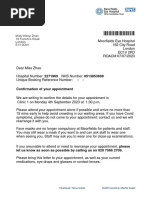
In NHS administrative language, a patient who does not attend a scheduled appointment is recorded as a 'DNA' — Did Not Attend. It is a small, bureaucratic label, but its consequences can be surprisingly far-reaching. Across the country, patients are being quietly removed from waiting lists, having referrals cancelled, or finding themselves back at the beginning of a care pathway — all because of a single missed appointment, whether that absence was their fault, the system's, or simply a matter of miscommunication.
What makes this particularly concerning is how easily one missed appointment becomes two, then three, until a patient is effectively invisible to the services they need. This is the DNA cycle: a self-reinforcing pattern in which disrupted care leads to worsening symptoms, which in turn makes engagement with appointments more difficult, which leads to further disruptions. For patients managing chronic illness, mental health conditions, or complex social circumstances, this cycle can be genuinely dangerous.
The first step towards breaking it is learning to recognise it.
Why Patients Miss Appointments — and Why It Is Not Always Their Fault
It is tempting to treat missed appointments as a straightforward failure of individual responsibility. The reality is considerably more complicated. Research consistently shows that the patients most likely to miss NHS appointments are also those with the greatest clinical need: people living with depression or anxiety, those in precarious employment, patients without reliable transport, carers, and individuals managing multiple health conditions simultaneously.
Beyond patient-side factors, the NHS itself generates missed appointments through administrative failures. Letters sent to outdated addresses, text reminders that arrive after the appointment date, bookings made without consulting the patient's availability, and referrals that are processed but never communicated — all of these are systemic failures, yet their consequences are frequently recorded against the patient's name.
If you have ever arrived for an appointment only to be told there is no record of it, or received a letter informing you that a referral has been cancelled due to non-attendance at an appointment you were never notified about, you have experienced the system's own contribution to the cycle.
How to Spot the Warning Signs
The DNA cycle often operates beneath the surface. Patients may not realise they are caught in it until significant time has passed. There are, however, recognisable warning signs worth monitoring:
- Gaps in correspondence. If you have not heard from a department for six weeks or more following a referral, do not assume the process is simply slow. Contact the service directly to confirm your position.
- Repeated rescheduling. If appointments are being cancelled and rebooked multiple times — by either party — your case may be drifting down the priority list without any formal decision being made.
- Inconsistent records. If your GP's records and a hospital department's records appear to tell different stories about what has been arranged, this is a sign that administrative coordination has broken down.
- Unexplained removal from waiting lists. Under NHS England guidelines, patients should be notified in writing if they are removed from a waiting list, along with the reason. If this has not happened, you have grounds to challenge the decision.
Protecting Yourself: Documentation as Your First Line of Defence
The single most effective tool available to patients navigating a fragmented care pathway is a personal record. This does not need to be elaborate. A simple notebook or a document on your phone, updated consistently, can make an enormous difference when you need to escalate a concern or challenge an administrative decision.
Your record should include the date and time of every appointment, the name of the clinician or department involved, any referrals made and the dates on which they were made, and — critically — every cancellation, whether initiated by you or by the NHS. If an appointment is cancelled by the service, note the reason given and the name of whoever communicated it to you.
When corresponding with the NHS about your care, do so in writing wherever possible. An email creates a timestamped record that a phone call does not. If you must communicate by telephone, follow up with a brief written summary: 'Further to our conversation on [date], I understand that [outcome]. Please confirm this in writing.' This simple habit can prevent disputes about what was agreed.
Communicating Proactively: What to Say and When to Say It
If you know in advance that you will be unable to attend an appointment, notify the service as early as possible and request a rebooked date in the same communication. A message along the following lines is both courteous and strategically sound:
'I am writing to inform you that I am unable to attend my appointment on [date] due to [brief reason]. I would be grateful if this could be rearranged at the earliest opportunity. Please could you confirm the new date in writing? I am available on [days/times].'
If an appointment has been missed — for whatever reason — contact the service promptly rather than waiting to hear from them. Proactive engagement signals that you remain committed to your care and makes it significantly harder for administrators to record your absence as a straightforward DNA without further action.
For patients whose circumstances make attendance consistently difficult — whether due to disability, caring responsibilities, or transport barriers — it is worth formally requesting reasonable adjustments. The NHS has a legal obligation under the Equality Act 2010 to make reasonable adjustments for patients with disabilities, and this can extend to appointment formats, times, and locations.
When the System Has Failed You: Escalation Routes
If you believe that a missed appointment or a cancelled referral was the result of an NHS administrative failure rather than your own non-attendance, you have clear routes available to you.
Begin by raising the matter formally with the service's Patient Advice and Liaison Service (PALS). Every NHS trust has a PALS team whose role is to resolve concerns without the need for a formal complaint. They can investigate what happened to a referral, clarify your position on a waiting list, and facilitate communication between departments.
If PALS cannot resolve the matter, you may wish to submit a formal complaint under the NHS complaints procedure. This gives the trust a legal obligation to respond within a defined timeframe and to explain what went wrong. Should you remain dissatisfied, the Parliamentary and Health Service Ombudsman (PHSO) provides an independent avenue for further escalation.
Your GP can also be a powerful ally in this process. A GP who is aware that their patient has been caught in an administrative loop can reissue a referral, write supporting letters, or contact a department directly. Do not assume your GP knows what has happened — inform them explicitly and ask for their involvement.
Breaking the Cycle for Good
The DNA cycle is not inevitable. It is a product of systemic pressures, communication failures, and circumstances that can, with the right approach, be actively managed. Patients who document their care carefully, communicate proactively, and know how to escalate when things go wrong are far less vulnerable to being lost in the system.
At Doctors for Patients UK, we believe that informed patients are better protected patients. Understanding the mechanisms by which care can be disrupted — and knowing precisely what to do when it is — is not a luxury. For those managing serious or long-term conditions, it may be the difference between timely treatment and months of avoidable deterioration.
If you are concerned that you may already be caught in a missed appointment cycle, act now. Contact the relevant department, update your GP, and begin your documentation record today. The system can be navigated — but it requires you to be an active participant in your own care.