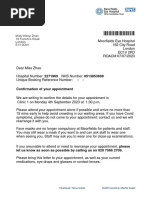
When the NHS Lets You Down: How to Pursue Compensation for a Missed or Delayed Appointment

Most patients who experience a missed appointment, a lost referral, or an inexplicably delayed procedure simply absorb the frustration and move on. They assume the system is overstretched, that nothing will come of raising a complaint, or that they lack the knowledge to challenge an institution as vast and complex as the NHS. In many cases, that assumption costs them dearly — not only in terms of their health, but in terms of rights they were entirely entitled to exercise.
The truth is that when the NHS fails to deliver care in a clinically appropriate timeframe, and that failure causes measurable harm, patients have legal avenues available to them. Understanding those avenues is not about antagonising the healthcare system. It is about holding it to the standards it has committed to uphold.
What Counts as a Compensable Failure?
Not every delayed appointment gives rise to a valid compensation claim. The NHS operates under significant pressure, and waiting times — frustrating as they are — do not automatically constitute negligence or actionable failure. What matters is whether the delay or missed booking caused harm that would not have occurred had care been delivered appropriately.
A valid claim typically requires three elements to be present. First, there must be a duty of care — which the NHS owes to every patient it accepts. Second, there must be a breach of that duty, meaning the standard of care fell below what a reasonable healthcare provider would have delivered. Third, and critically, that breach must have caused direct harm: a worsening condition, a missed window for treatment, a preventable complication, or a deterioration in quality of life.
Common scenarios that may meet this threshold include: a referral that was never processed or acknowledged, leaving a serious condition undiagnosed for months; a follow-up appointment that was booked but never communicated to the patient; a diagnostic procedure cancelled repeatedly without clinical justification; or a patient removed from a waiting list without notification or consent.
Gathering Your Evidence
Before pursuing any formal route, it is essential to assemble a clear and organised body of evidence. This serves two purposes: it strengthens your case considerably, and it helps you assess whether the circumstances genuinely support a claim.
Begin by requesting your full medical records from your GP surgery and any relevant hospital trusts. Under the UK General Data Protection Regulation (UK GDPR), you are entitled to access these records free of charge, and organisations must respond within one month. Pay particular attention to referral letters, appointment booking confirmations, clinic letters, and any correspondence from the NHS 18-week Referral to Treatment (RTT) pathway.
Document the timeline of events as precisely as possible. Note dates on which you were told to expect contact, dates on which appointments were cancelled or failed to materialise, and any communications you received — or notably did not receive. Keep records of phone calls, including the names of staff members where possible, and retain any written correspondence.
If your condition worsened during the period of delay, obtain a clinical opinion — ideally from your GP or a specialist — that links that deterioration to the absence of timely care. This medical evidence is often the most persuasive element of any claim.
The NHS Complaints Process: Your First Step
Before a compensation claim can proceed through formal legal channels, patients are generally expected to have exhausted the NHS complaints procedure. This is not merely a procedural formality; it frequently results in resolution, acknowledgement, and sometimes financial redress without the need for litigation.
Complaints about NHS care in England should be submitted to the relevant NHS trust or GP practice directly. You have twelve months from the date of the incident — or from when you became aware that something had gone wrong — to lodge a formal complaint. The organisation must acknowledge your complaint within three working days and provide a full response within a reasonable timeframe, typically no longer than six months.
If you are dissatisfied with the response, you may escalate your case to the Parliamentary and Health Service Ombudsman (PHSO), which independently investigates complaints about NHS organisations in England. The Ombudsman can recommend financial remedies, service improvements, and formal apologies.
Similar routes exist in Scotland (Scottish Public Services Ombudsman), Wales (Public Services Ombudsman for Wales), and Northern Ireland (Northern Ireland Public Services Ombudsman).
NHS Resolution and Clinical Negligence Claims
Where a complaint does not yield adequate resolution, and where the harm suffered is significant, a formal clinical negligence claim may be appropriate. In England, these claims are handled through NHS Resolution, the body responsible for managing negligence claims against NHS trusts.
Clinical negligence claims in England and Wales are subject to a three-year limitation period, running from the date of the negligent act or from the date on which you became aware of the harm caused. Engaging a solicitor who specialises in clinical negligence is strongly advisable at this stage. Many operate on a conditional fee arrangement — commonly known as a no-win, no-fee agreement — which means legal costs are not incurred unless the claim succeeds.
Your solicitor will commission an independent medical expert to review your records and provide an opinion on whether the standard of care was breached and whether that breach caused your injuries. This expert evidence forms the foundation of any formal claim.
Settlements in clinical negligence cases can cover pain and suffering, loss of earnings, the cost of additional treatment necessitated by the delay, and ongoing care needs. Awards vary considerably depending on the severity of harm, but even modest claims can result in meaningful financial acknowledgement of the impact on a patient's life.
Patient Support and Advocacy Resources
Navigating this process alone is daunting. Fortunately, a number of organisations exist specifically to support patients through complaints and claims. AvMA (Action against Medical Accidents) offers free advice to patients who have been harmed by healthcare and can help you understand whether your circumstances warrant a claim. Your local Healthwatch organisation can provide guidance on the complaints process and advocate on your behalf. NHS England's Patient Advice and Liaison Service (PALS) can assist with immediate concerns and help facilitate resolution before formal complaints become necessary.
Legal aid is no longer available for most clinical negligence claims following reforms introduced in 2013, but the conditional fee model has ensured that access to justice remains available to patients regardless of financial means.
A System That Must Be Held to Account
The NHS is a publicly funded institution, and patients are not supplicants requesting favours — they are entitled recipients of a service that has made explicit commitments about the standards of care it will deliver. When those commitments are broken and harm results, seeking accountability is not an act of disloyalty to the health service. It is an exercise of the rights that exist precisely because patient safety matters.
If you believe you have been harmed by a missed appointment, a lost referral, or a systemic failure to deliver timely care, do not allow the scale of the institution to deter you. Document what happened, seek advice early, and pursue the process with the knowledge that the law and a range of support organisations stand behind you.