When Your Body Doesn't Read the Textbook: How to Help Your Doctor Recognise an Atypical Diagnosis
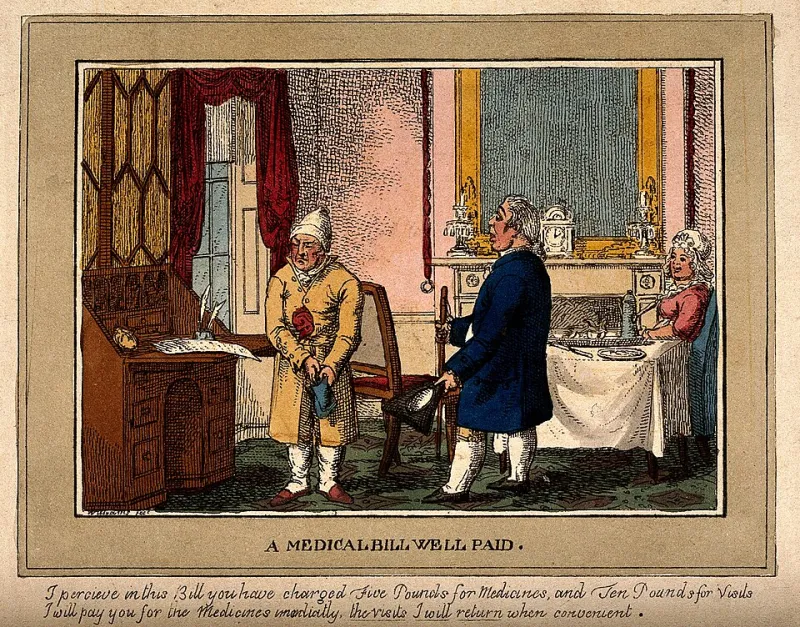
Photo: Unknown, CC BY 4.0, via Wikimedia Commons
When the Symptoms Don't Add Up
Most of us grow up trusting that medicine is a precise science. You describe your symptoms, the doctor considers the possibilities, and a diagnosis follows. For a great many patients, that process works reasonably well. But for a significant number of people—those whose conditions present in ways that deviate from the expected pattern—the journey to a diagnosis is far longer, far more frustrating, and sometimes never fully completed.
This is what clinicians sometimes refer to as an atypical presentation: a condition that is real and diagnosable, but whose symptoms do not conform to the textbook description. Heart attacks in women, for instance, are less likely to involve the classic crushing chest pain associated with the condition in men, and may instead manifest as jaw discomfort, nausea, or overwhelming fatigue. Coeliac disease can present without any gastrointestinal symptoms at all. Hypothyroidism may appear primarily as depression or cognitive difficulties rather than the more commonly cited physical signs.
When symptoms do not align with the expected picture, clinicians—through no fault of their own—may not immediately consider the correct diagnosis. The result is a diagnostic gap: a space between what a patient is experiencing and what the medical encounter is able to capture.
Why Atypical Presentations Are So Easily Missed
Medical education is, by necessity, built around patterns. Doctors are trained to recognise clusters of symptoms that point towards particular conditions. This pattern-recognition approach is efficient and, in the majority of cases, effective. However, it carries an inherent limitation: conditions that fall outside the standard cluster may not trigger the same diagnostic instinct.
Several factors increase the likelihood of a missed or delayed diagnosis in atypical cases. Age plays a role—older patients often experience conditions differently from younger people, and the presence of multiple co-existing conditions can mask or modify symptoms. Sex and gender matter too; research has consistently demonstrated that women's symptoms are more likely to be attributed to anxiety or stress before organic causes are fully investigated. Ethnicity can also influence how conditions present, as well as how symptoms are interpreted within a clinical encounter.
There is also the issue of time. A standard GP appointment in England lasts approximately ten minutes. Within that window, a clinician must listen, examine, document, consider differentials, and plan next steps. Atypical presentations, by definition, require more lateral thinking—and lateral thinking requires time that is often simply not available within routine NHS appointments.
Finally, there is the catch-all category of 'medically unexplained symptoms,' a label applied when investigations return normal results despite ongoing patient distress. While this classification is sometimes appropriate and genuinely helpful, it can also function as a diagnostic endpoint rather than a diagnostic starting point—closing off further investigation rather than prompting a broader search for answers.
The Patient's Role in Narrowing the Gap
While the structural pressures on clinical time are real and not something individual patients can resolve, there is meaningful evidence that how patients present their symptoms can influence diagnostic outcomes. This is not about placing additional burden on people who are already unwell; it is about equipping patients with practical tools that make the clinical encounter more productive for both parties.
Keep a structured symptom diary. Rather than relying on memory during a consultation, maintain a written or digital record of your symptoms over time. Note when symptoms occur, how long they last, what makes them better or worse, and whether they correlate with particular activities, foods, sleep patterns, or menstrual cycles. Patterns that are invisible in a ten-minute consultation can become unmistakable across several weeks of documented data.
Be specific about what is different for you. Clinicians are trained to ask about common presentations, but they can only respond to what they are told. If your pain does not feel like pain—if it is more accurately described as pressure, heat, or a strange absence of sensation—say so explicitly. If your fatigue is not tiredness in the ordinary sense but something that feels neurological or physical in a way you struggle to articulate, try to find the words that most precisely capture it, even if those words feel unusual.
Bring a timeline, not just a symptom list. Diagnostic clarity often emerges from understanding how a condition has evolved. A written chronology—beginning with the earliest symptom you can recall, however seemingly unrelated—gives a clinician a broader canvas on which to identify a pattern that might not be visible from the presenting complaint alone.
Research without self-diagnosing. There is a meaningful distinction between arriving at a consultation having read widely about conditions that share your symptom profile, and arriving having decided what you have. The former is helpful; the latter can create unnecessary friction. You might say: "I've been reading about conditions that can cause this combination of symptoms, and I wondered whether it might be worth considering X or Y—I'd be very grateful for your thoughts." This invites clinical engagement rather than demanding a particular conclusion.
When to Seek Further Support
If you have seen your GP repeatedly without a satisfactory explanation for your symptoms, you have the right to request a referral to a specialist. You also have the right to seek a second opinion, whether within the NHS or privately. These are not confrontational acts; they are legitimate exercises of your rights as a patient, and most clinicians will understand the request.
Patient advocacy organisations can also be invaluable. Many conditions that are frequently missed or delayed in diagnosis—including endometriosis, hypermobile Ehlers-Danlos syndrome, lupus, and certain autoimmune conditions—have dedicated charities and support networks whose members can offer guidance on which specialists to seek out, what questions to ask, and how to navigate the referral pathway.
It is also worth knowing that if your symptoms have been labelled as medically unexplained, this does not mean that no further investigation is warranted. It means that investigations conducted so far have not yielded an answer. You are entitled to ask what further tests might be considered, whether a specialist opinion would be appropriate, and what the plan is if symptoms persist or worsen.
A Partnership, Not a Performance
At Doctors for Patients UK, we believe that the most effective clinical encounters are those in which patients and doctors work as genuine partners. That partnership is harder to achieve when one party's experience does not fit the expected framework—but it is not impossible. Preparation, precision, and persistence on the part of the patient, combined with a willingness to listen beyond the textbook on the part of the clinician, can together close the diagnostic gap that leaves so many people suffering in silence.
Your symptoms are real. Your experience is valid. And with the right tools and support, there is every reason to keep seeking the answers you deserve.